
Mediation with David Eaker
Scheduling — book it in two minutes, from wherever you are
Check my calendar and book a date →
The calendar is live and current. No call, no phone tag, no waiting to hear whether a date is open.
Which means you can do this standing in the hallway at the courthouse. You and opposing counsel have just agreed to mediate and you both have your phones out. Pull up the calendar, find a date you can both live with, and book it before either of you walks away. That conversation does not have to turn into two weeks of email.
Or let us do the work
If you would rather hand it off, Heather will handle it — email her the names and she will reach out to the other side, trade calendars, chase the date, and swap it if something moves. Whatever the scheduling actually requires. That is her job, not a favor.
And if the situation is unusual, say so. A tight deadline, a trial setting coming up fast, an out-of-state party, a date that has to happen inside two weeks, something that does not fit the normal pattern. We can usually accommodate more than the calendar shows. Ask — the worst outcome is that we cannot, and you will know within the hour.
(972) 772-8005 · [email protected]
Rates
| Per party | |
|---|---|
| Half-day | $750 |
| Full-day | $1,400 |
| Additional time beyond the scheduled session | $200 / hour |
Plan for a full day unless both sides agree the issues are limited enough for a half. The most common reason a half-day session fails is that it was a full-day case. Allow enough time to give settlement a chance.
There is no cancellation fee
Most mediators charge one. I do not, and the reasoning matters more than the policy.
If the approaching mediation date is what finally pushes a case to settle, that is a good outcome. It is the outcome everyone wanted. I am not going to put a financial obstacle in front of it so that I can be paid for a day I did not work. My objective as a mediator is to help you settle, and if the pending mediation is what makes that happen, I have accomplished my goal.
I would appreciate as much notice as you can give me — but that is courtesy, not a term. I also maintain an active law practice, so a cancelled date is never a wasted one on my end.
One exception: when a party is not represented
When someone is coming to mediation without an attorney, I ask for payment about a week in advance.
This is not a judgment about anyone’s good faith. When a party has counsel, their lawyer has already explained how mediation costs work and what the day involves. When there is no lawyer in the picture, that conversation has not happened — and the bad outcome is someone arriving at the session and learning for the first time that they are expected to pay for it, or one of the parties failing to appear at all.
Collecting in advance means everyone arrives with the same understanding. It matters most when one side is represented and the other is not, where an unresolved question about payment can waste a day both sides cleared their calendars for.
The room and the day
Mediation is a long day. People arrive frightened, they spend hours waiting while someone else is being talked to, and they are asked to make permanent decisions about their children and their money late in the afternoon when they are tired. The physical experience of that day is not a small thing. It affects whether somebody can think clearly at four o’clock, and that affects whether the case settles.
So it is taken seriously here.
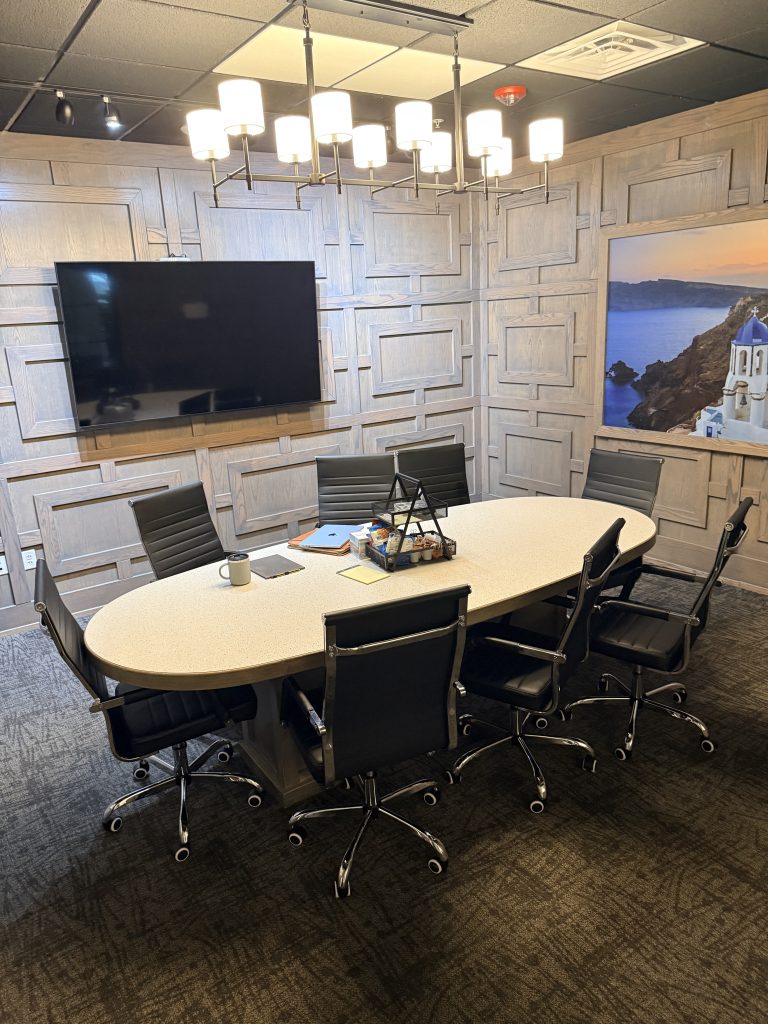
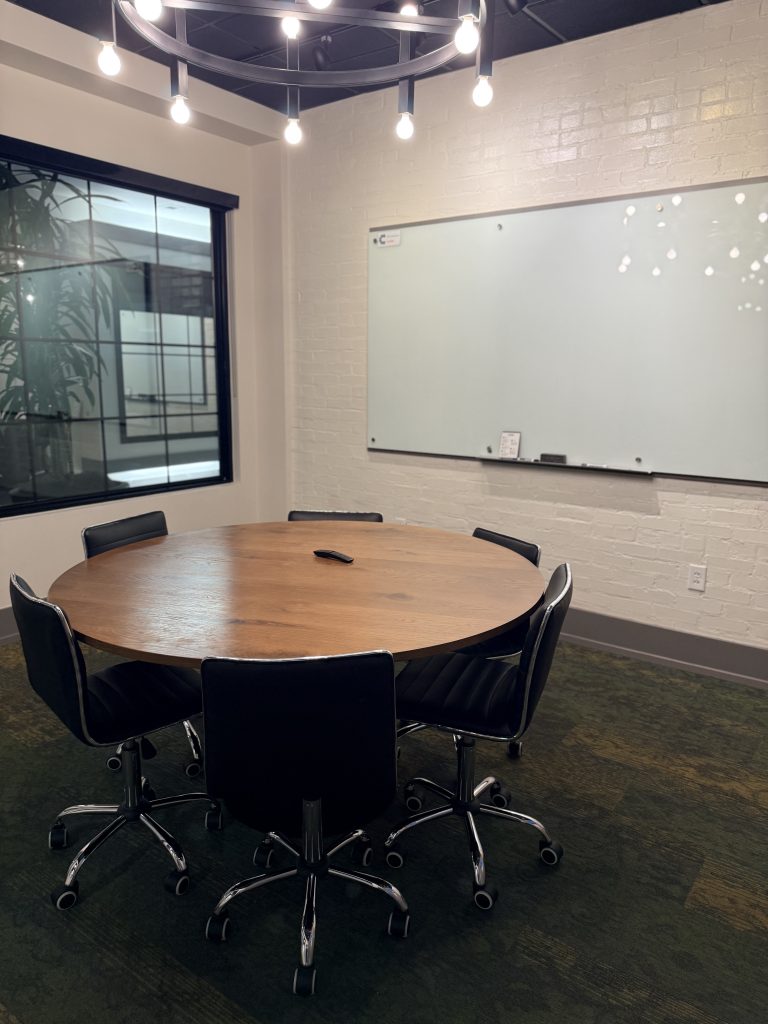
Rockwall — 2313 Ridge Road
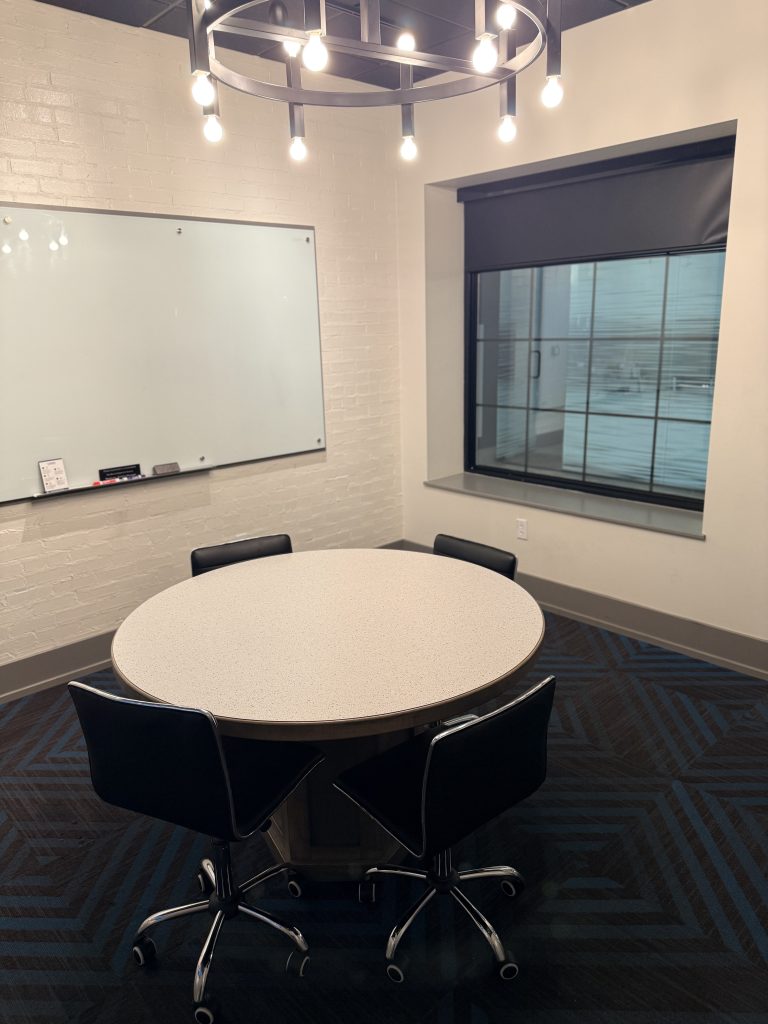
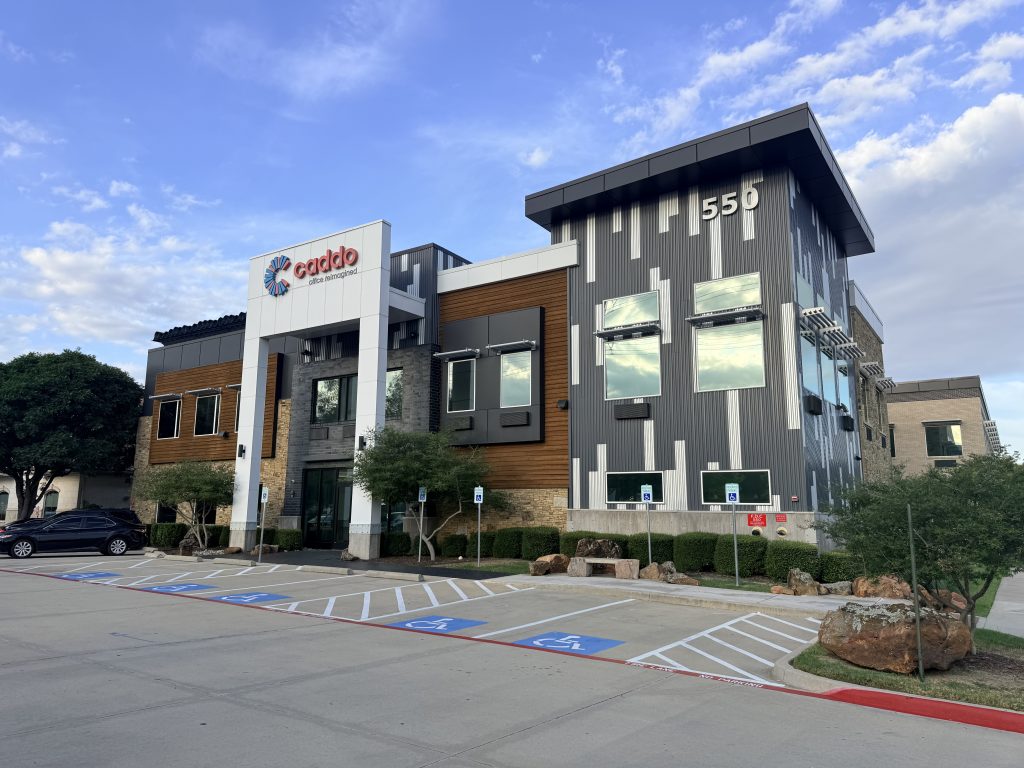
Allen — 550 S. Watters Road
The layout is the point
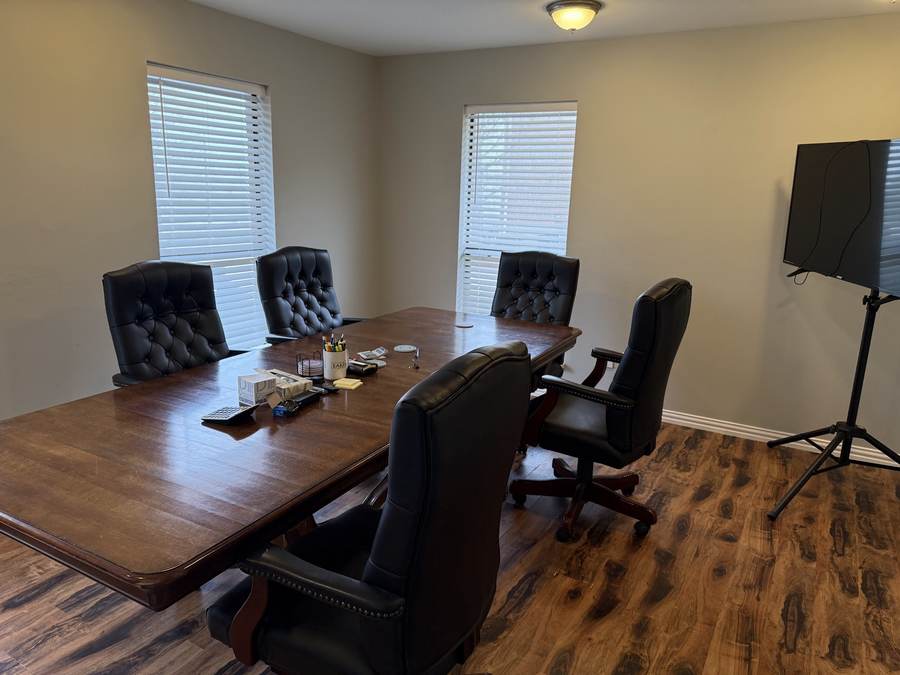
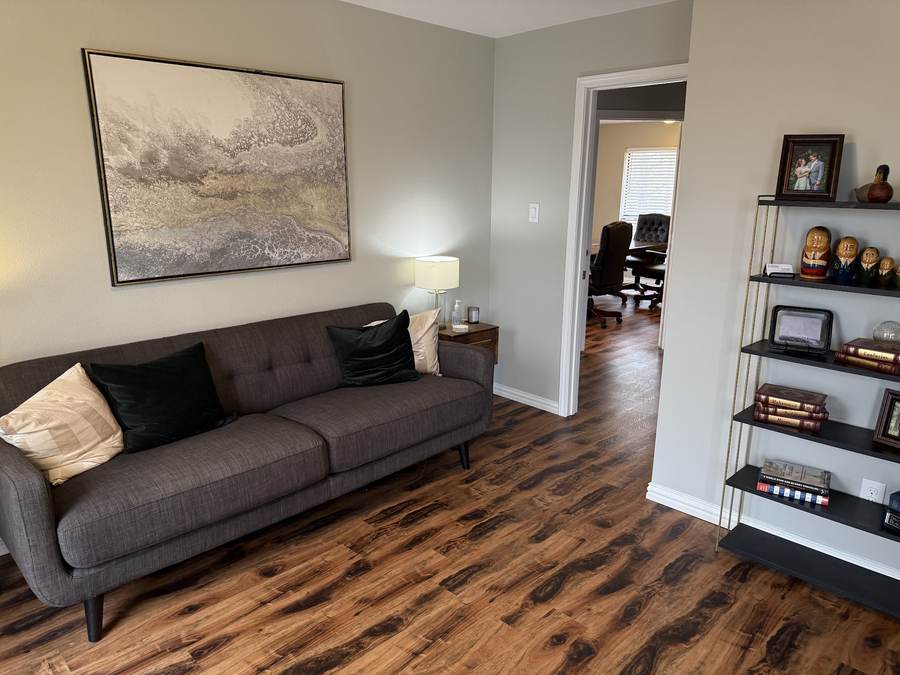
Rockwall: two large conference rooms at opposite ends of the office, with separate bathrooms and separate air conditioning for each side.
Your client can spend eight hours in mediation without encountering the other party at all.
You will also not hear them. Opposite ends of the office, not adjacent rooms — so there is no voice through a wall, no raised tone from next door, no sense that the person your client is afraid of is sitting four feet away. That feeling is not a comfort issue. A client who spends the day braced cannot evaluate an offer at four o’clock.
The separate A/C matters for a duller reason: a party sitting in one room for an entire day should be able to set the temperature in it. Nobody negotiates well while freezing or sweating.
A third room when the case needs one — for an amicus or ad litem, for an expert, for a support person, or for the two attorneys to talk privately without either client in the room. A good deal of the real work happens in that last conversation, and it should not have to happen in a hallway.
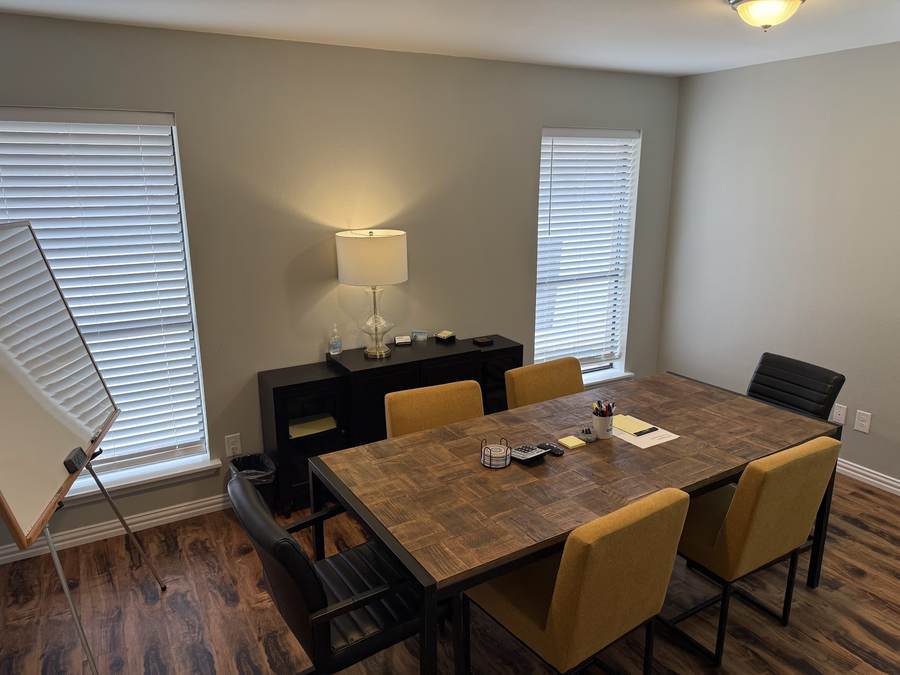
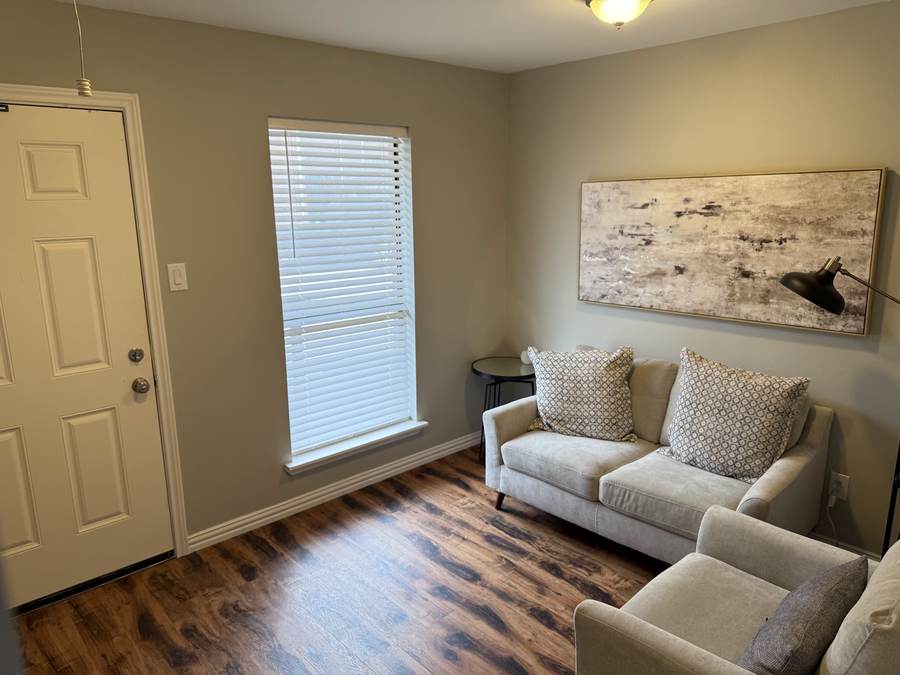
Allen: conference rooms placed well apart, and enough of them to run four or five parties in separate rooms. Most venues cannot do that. If your case has grandparents, an intervenor, an amicus and two parents, the logistics usually collapse before the negotiation starts. Here they do not.
Coffee, drinks and snacks throughout. Continuously, not as a gesture at eleven o’clock.
Lunch is brought in on full-day mediations, at my expense. More to the point: we work through it. Nobody leaves the building, nobody loses the thread of a negotiation to a restaurant, and the day does not stall for forty minutes at the moment it was finally moving.
If there is something specific your client needs, tell us in advance — we aim to please. A diabetic client who needs to eat on a schedule, someone who cannot have caffeine, a client bringing a nursing infant, an accommodation for a disability. It is easier to arrange beforehand than to improvise at noon, and none of it is any trouble.
The schedule
We go until we are done. I aim to finish by five, and most days we do. But if the case is close at five, we stay — a mediated settlement agreement signed at six-thirty is worth considerably more than a good day’s work abandoned because the clock struck 5:00.
So if anyone has a hard stop, I need to know in the morning. A flight, a child pickup, something else — tell me at the start and I will run the day around it. What does not work is learning at five-thirty that one side has to leave, because that is the hour when cases settle, and it is too late to have built the day differently.
Where we can meet
- In person at Rockwall — 2313 Ridge Road, Suite 103
- In person at Allen — 550 S. Watters Road
- By Zoom
- Hybrid — one party in person and one remote
- At either attorney’s office, when the parties agree and it makes practical sense
For attorneys
I do not require anything in advance
No position statement. No memorandum. No deadline to miss.
You are preparing for a mediation and probably for three other things this week, and I am not going to add to that. If you send me nothing at all, we will be fine — I will get what I need at the session, which is where I get most of it anyway.
That said, I read everything I am sent, and I read it before you arrive. If you already have something drawn up for your own purposes — a position summary, an inventory, the current order, the numbers you are working from, a note about what actually matters to your client versus what is on the pleadings — send it and it will not go unread. Anything that saves an hour of me learning the case in front of your client is an hour spent on the part you came for. I want to be prepared, and I will work hard before mediation to be ready for your case.
Send it however you like, whenever you like. If it arrives the morning of, I will read it that morning.
Mediation day is here: what to expect
Your client will never be in the same room as the other party. Not for an opening session, not for anything. Each side has its own room for the day and I move between them.
In Rockwall the two rooms are at opposite ends of the office with separate restrooms, so the only place the parties could cross paths is the parking lot. In Allen the rooms are well separated. Nobody is asked to sit across a table from someone they are divorcing, and nobody has to brace for the moment they might.
I am not merely a messenger. A neutral who carries numbers from one room to the other and adds nothing is not mediating, and you did not need to pay for a courier. I play devil’s advocate. I will test your client’s assumptions and I will test yours, because the assumption nobody examined is where most agreements fall apart eighteen months later. We will work through the issues and strive to resolve your case.
Expect the real questions, asked out loud: Is your client’s position unreasonable here? Are you overly optimistic? What is everybody missing? I am the only person who spends the day in both rooms, and that vantage point is worth nothing unless I actually tell you what I am seeing from it. And expect that the same conversation is happening on the other side of the building. You are not the only one being pushed.
I will not inflame an emotional issue that does not change the outcome, and I will not step around one that does. A great deal of what makes people angry in a family case has no bearing on what the order says, and a mediator who works that material is burning your day. But some of it matters enormously and has to be dealt with before anyone can sign anything. Telling those apart is most of the job.
I look for creative options, and I look hard for the problems that surface after everyone signs: the ambiguity nobody noticed, the provision that works this year and not the next.
Simple when simple will work. Complex only when the case actually requires it. There is no need to over-lawyer an agreement, and a document that is more complicated than required is its own future problem.
The emotional part is real and I do not pretend otherwise. People need to be heard before they can decide anything, and a mediator who rushes past that gets a worse agreement or none at all. But acknowledging it is not the same as litigating it. My job is to give it room and then bring the day back to the legal questions that actually have to be answered — because those are the ones that otherwise go to a judge.
The agreement. If the case settles, we draft the mediated settlement agreement that day, working with both attorneys, and everyone leaves with it signed. Nobody goes home with a handshake and a plan to paper it later.
If it does not settle
I will not make anyone settle. I am not the judge and I have no authority over your case. If your client decides not to settle, that is their right, and I will say so plainly rather than grind at them.
I also will not hold people hostage to force a deal. Here is what I tell everyone at the start of a mediation, and I mean all of it:
“I have other things I enjoy doing. If we are not making progress, I will let you go. But I am the only one in both rooms. If we are making progress, I am going to keep you around. You may not see it — but I am asking you to trust me with the process. Even if it feels like we are spinning our wheels, if I am keeping you here, trust that there is progress.”
Both halves of that are a commitment. I will not run the clock on a case that is going nowhere. And when it feels like nothing is happening, that is often the part where something is — because your room can only see half of it.
If we truly cannot get there, we declare impasse and you go try your case. Some cases need a judge, and that is a legitimate outcome rather than a failure.
But it is worth being clear-eyed about what impasse means. Mediation is usually the last chance to resolve a case on your own terms before control passes to a judge and a trial setting. The stakes are high enough that the effort to keep that control is almost always worth making.
On fit — and on when you should hire somebody else
This is what lawyers actually weigh when they pick a neutral, and almost nobody writes about it, so let me be direct.
Cases are resolved when the parties feel safe to make a deal. Often the best deal is described as the one neither wants but both can live with. That requires a structure where the parties feel heard, feel safe to process, and can understand what is at stake. Sometimes specific parties have specific needs — acknowledged or otherwise. As attorneys, we look for mediators who match the particular case and the particular people in it. No single mediator is ideal for every case.
None of that is about being nice to people. It is about removing the specific thing standing between a person and a decision, which is different for every person in the building.
The professionals in the family law system see people. Family lawyers, amicus attorneys, ad litems and judges have watched a great many of these cases. We recognize traits, we are not easily fooled, and we do not miss what the general public may routinely miss. We are not easily duped — and that is what lets us work the actual problem and find creative solutions.
That cuts in every direction. It is a relief if you have been disbelieved. It should be sobering if you were planning to manage the room. Neither is a favor to either side — it is simply what twenty-seven years of this work does to a person’s eye.
And sometimes the answer is a different mediator
Consider a mediator who is quick, direct, in and out, and will not let anybody sit in their feelings for even a minute. For the right case he is excellent — better than I would be. For a case where a party needs to feel heard before they can process anything else, he is the worst possible choice.
And sometimes the fit has nothing to do with approach or ability at all. A party may simply be more willing to open up to a man, or to a woman, or to someone who has been divorced themselves, or to someone who shares their culture. Those things affect how a day goes, and pretending otherwise does not help your client.
If your case has unique needs and you are struggling to find the right mediator — ask me, and I will tell you what I can bring to it, or we can find someone who fits better. I would rather you bring me the cases that fit than have a day go badly for the parties. My goal is simple: set up a process that has the best chance of helping them settle.
What mediation can do that a courtroom cannot
Worth saying plainly, because it is the reason this room exists. A judge can only order what a judge is allowed to order, in the time a docket allows, and in broad strokes.
In mediation we are not bound by that. We can build a possession schedule around a parent’s actual shift rotation, a step-up that responds to something happening next spring, a division that trades certainty against value in a way no court would construct on its own, a provision that anticipates the argument you can both see coming in two years. None of that is available in a courtroom, and most of it is the difference between an order a family can live under and one they will be back to fight about.
That is what the day is for.
A day that does not settle is still not a wasted day
This is the part of mediation nobody talks about enough, and it is worth saying plainly to counsel: you try a better case after a mediation than you would have without one.
- You learn the other side’s case. Not their pleadings — their actual priorities, what they will fight for, what they were quietly willing to trade, and where their numbers come from. You cannot get that in discovery.
- The issues narrow. Things that looked contested turn out not to be. What is genuinely in dispute comes into focus, and you walk out knowing what your trial is actually about.
- You find out what matters to your own client. Eight hours in one room together tells you more than a year of office appointments and email.
- You know your client under pressure — how they hold up, how they testify, what they do when they are tired and frightened. That is exactly the condition they will be in on the stand, and you have now seen it.
So the honest pitch to a lawyer scheduling mediation: the downside case is that you spend a day and leave better prepared for trial. That is not a bad worst outcome.
Sometimes the answer is “not today”
Mediation occasionally happens at the wrong moment. The emotions are still too raw. A valuation gap needs an appraisal or an evaluation before anyone can negotiate honestly across it. When that is what is actually going on, we can adjourn and reconvene another day rather than force a result out of a session that was premature.
And if the parties and counsel want to, we can settle some issues and not others. A partial agreement is not a failed mediation — it is a shorter trial on fewer questions, and that is worth something to everybody.
It is your case. I am just here to help.
Payment
Most attorneys forward this link to their client, who pays their share directly. Some prefer to pay from their own account — either is fine. You are also welcome to bring a check to the session, though most people find the card link easier.
When you pay, please give us the name of the case and the name of the person the payment is for. It sounds like a small thing and it is the single most common source of confusion — particularly when somebody other than the party is paying. A grandparent, a new spouse, or a parent covering an adult child’s case will show up on our end as a name we have never seen, with no way to tell which of that week’s mediations it belongs to. Two lines in the notes field solves it.
For parties
If your attorney sent you this page, it is because they want you to know what the day actually looks like. It is shorter than the worry.
What mediation is
A mediator is not a judge. I do not decide anything, I do not take anyone’s side, and I do not represent either of you. My job is to help the two of you reach an agreement you can both live with — one built by the people who have to live under it, rather than one imposed by someone with a docket to clear.
Will I have to sit across from them?
No. You and the other party will be in separate rooms the entire day, at opposite ends of the office, and I will move between them. You will not see them and you will not hear them.
How long does it take?
Plan for the whole day, and plan to be here until we are finished. Lunch is brought in and we keep working through it. I aim to be done by five and usually am — but if we are close at five, we stay, because an agreement signed tonight beats starting over.
Cases settle at four o’clock far more often than at eleven. That is not anyone holding back; it takes most of a day to work through the real questions. Bring something to do during the stretches when I am in the other room, and a phone charger.
If you have something you truly cannot miss that day, tell your attorney before we start so I can plan around it. Do not wait until the afternoon to surprise us with a hard stop.
Do I have to agree to anything?
No. Mediation is not binding unless and until you sign an agreement. You can leave without signing. What you should know is that a mediated settlement agreement (MSA) in Texas is very difficult to undo once signed — so signing is a real decision, and your attorney will walk you through it first. If you have questions about this, speak to your lawyer. This is really important.
What should I bring?
Whatever your attorney asks for, plus patience. If there is a number you will need — a mortgage balance, a retirement statement, a school calendar — bring it. Agreements stall on missing numbers more often than on missing willingness.
Will you take my side?
No, and you should want that. I will ask hard questions in your room, and I will ask them in the other room too. If I only challenged one side, I would be useless to both. Trust me — I am pushing on everyone throughout the day. If instead I simply praised each party’s brilliant legal position, I would do nothing but polarize the two of you, which serves no one.
What I will not do is decide your case or push you into an agreement. If you do not want to settle, you do not have to. That is your decision. But I am here to help you find an agreement if one is possible.
What does it cost?
The fee is above and is normally shared equally. Your attorney will tell you how yours is handled.
About David Eaker

Practicing family law in North Texas since 1999. Twenty-seven years of courtroom and settlement experience, which is where the perspective at the mediation table comes from — I have tried the kinds of cases I am now asked to help resolve.
B.A., Vanderbilt University. J.D., SMU Dedman School of Law. Credentialed by the Texas Mediator Credentialing Association. My practice is family law and nothing else.
Book a date → · (972) 772-8005 · [email protected]
Or email Heather and she will handle the scheduling from there.