
Allen Divorce & Family Law Attorney
If your family case is going to be filed in Collin County, the single most useful thing you can know at the start is that the law is the same everywhere in Texas and the practice is not. The Family Code that governs your divorce in Allen is the identical statute that governs it in Rockwall or Dallas. How your case actually gets heard is not identical at all — and in Collin County the differences are unusually specific.
We do family law and nothing else. No criminal docket, no personal injury cases, no estate planning practice competing for attention — divorce, child custody, property division, modifications, enforcement, and appeals, from offices in Allen and Rockwall.
The 20-minute rule, and why it decides more than people expect

Collin County limits temporary orders hearings to twenty minutes per side. It applies some of the strictest limits in the region on final trial time as well. The multi-day trial people picture from television does not happen here.
That single rule reshapes how a Collin County case has to be prepared. Twenty minutes is not enough time to tell a story, walk a judge through a marriage, or let a witness warm up. It is enough time for a lawyer who has decided in advance which three facts matter, has the documents organized so the judge can absorb them without narration, and knows how this particular court prefers to receive information. Collin County practice runs on summaries, exhibits and time-saving devices, and a lawyer who has not worked in these courts tends to spend the first eight minutes on material a local lawyer would never have raised.
This is the part of a Collin County case where preparation and judgment beat volume — and it is the clearest reason not to hire a firm that treats your hearing as one more slot on a docket somewhere else.
The standing order that is already in effect
Many Collin County family courts issue a standing order that takes effect automatically the moment a divorce or custody case is filed. Nobody serves it on you as a separate event, and nothing has to be argued for it to bind you.
These orders commonly restrict moving children out of the area, disposing of marital property outside the normal course of business, and removing a spouse from health insurance, absent an agreement or a further court order. They apply to both spouses equally. They are not an accusation and not a finding against anyone — they exist to keep two people from acting on their worst impulses during the months a case is pending.
The practical point: knowing what the standing order restricts from day one is considerably better than learning about it after inadvertently violating one. That is a conversation worth having before anything is filed, not after.
Mediation
While Collin County courts continue to impose some of the strictest time limits for a final trial in the state of Texas, those limits are even tighter if the parties fail to attend mediation. Given how little trial time is available to begin with, mediation is not a formality — for most families it is where the case is actually decided.
Mediation rewards preparation the same way a short hearing does: a realistic understanding of the likely range of outcomes, and priorities sorted out in advance so you know what you are willing to negotiate. Walking in without either is how people end up agreeing to something at nine at night that they do not understand in the morning.
Worth knowing: attorneys across North Texas choose David Eaker as their mediator — the court then appoints him by their agreement — to help resolve cases that are not his to settle. That is a substantial part of his practice, and it means he spends a great deal of time watching, from the neutral chair, which arguments actually move a settlement and which ones only run up a bill.
How long a case takes, and what it costs
Judges are under a mandate to resolve cases within twelve months of filing. Most Collin County cases resolve in nine to twelve months; a straightforward divorce where the parties largely agree can finish in three to six; a genuinely complicated one takes longer.
On cost, the honest ranges for this market: family law firms here generally ask for an initial deposit somewhere between $2,500 and $10,000, and hourly rates run from roughly $150 for paralegal work to roughly $500 for an experienced attorney. A simple divorce commonly runs about $2,500 to $5,000 per side in total fees. A typical contested case lands closer to $20,000 to $25,000 per party. A genuinely complicated one — serious asset disputes, expert witnesses, high conflict — can reach $40,000 to $50,000 per party or more.
What moves you within that range is how much the two of you contest and whether experts get involved. See How Much Does a Texas Divorce Cost? and 10 Practical Tips to Reduce Your Legal Costs.
Custody, and the Collin County calendar
In almost every case both parents end up joint managing conservators with independent rights to care for their children. That is the norm, and it is worth knowing before you spend months braced for a battle over whether you will be a parent.
The real work is the schedule, and in Collin County the schedule is unusually crowded. Allen, Plano, Frisco, McKinney and Wylie run some of the largest and most demanding school and activity programs in the state. A possession schedule that ignores a marching band season, a club sport calendar, or a competition weekend is not a workable order — it is a future modification case. Building one that actually fits the children’s lives, both parents’ work, and the reality of two households is the problem we spend our time solving.
Relocation: “Can I move out of Collin County with my kids?”
People move to Collin County for the work. Corporate relocations bring families to Allen, Plano and Frisco every year — and often enough, the same career that brought you here later needs to take you somewhere else. Then the question stops being about a job and starts being about whether your children can come with you.
Texas orders commonly carry a geographic restriction limiting where a child’s primary residence can be — frequently Collin County and the counties contiguous to it. That restriction can be negotiated when the order is first written, and it can be modified afterward, but neither happens on its own, and moving before the question is addressed is one of the more damaging things a parent can do to their own case.
Relocation cases — often called move-away cases — are among the most fact-intensive in family law. They turn on the reason for the move, what the child’s life actually looks like in each place, and how realistically the other parent’s relationship can be preserved across the distance. They reward early, careful preparation and punish improvisation. We have handled them for years, on both sides of the question.
If you are lying awake wondering “am I stuck in Collin County?” — call us. You have options, and they are far better explored before you accept the offer than after.
Complex property, which Collin County produces a great deal of
Collin County is corporate headquarters country, and the property side of a divorce here looks different from most places. Restricted stock, options and deferred bonuses are ordinary compensation for a large share of families in Allen, Plano and Frisco — and they are among the most commonly mishandled assets in a divorce, because they are earned at one time and paid at another. Business owners, professional practices, executive compensation packages, and separate property that needs tracing all turn up regularly.
This is the work we do most. See Complex Property Division for how these cases are built.
Why this firm, in this county
The Collin County argument is experience and judgment, and we would rather be specific than modest about it.
David Eaker has practiced law since 1999 — licensed in the last century, which is its own kind of credential in a market full of new firms. He is a graduate of Vanderbilt University and SMU School of Law. He has argued and won family law appeals on questions that arise when the facts do not fit the standard template, including common law marriage and parentage; those decisions are set out on our Family Law Appeals page. He is chosen by other attorneys, on both sides of cases, to mediate their disputes.
And you get a team rather than a single calendar. David keeps the principal strategic role, with our associate attorney Leslie Alvarez and our paralegal Heather Mixon — who brings more than twenty years of family law experience — carrying work under that direction at their own rates. You do not have unlimited resources, and part of our job is telling you when something is not worth doing.
An Allen family, not just an Allen address

David lives in Allen. His stepdaughter marches with the Allen Eagle Escadrille, the Allen High School band and one of the largest high school band programs in the country, where she serves as a color guard officer. Anyone whose family has been through an Escadrille season already knows what a fall Friday costs a household in time — and knows why a possession schedule written without looking at that calendar does not survive September.
Before Allen, he raised his two sons in Plano, where they played sports through school and both graduated from Plano Senior High School. Those years are the reason a possession schedule built around a Collin County activity calendar is not an abstraction here. We have run that calendar.
Common questions
Do I have to file in Collin County?
Generally you need to have lived in Texas six months and in the county ninety days before filing. If you and your spouse are in different counties, there is often a real choice about where the case belongs — and given how differently Collin County runs, that choice can matter more here than most places.
What is a standing order and do I have one?
It is an order that takes effect automatically when the case is filed, restricting both spouses from certain actions during the case. Many Collin County courts use them. Ask before you file, not after.
Can I move away from Collin County with my children?
It depends on whether your order contains a geographic restriction and what the facts of the move look like. It is a question to raise before you commit to anything, not after — see the relocation section above.
Will I get a full trial?
Almost certainly not in the form people imagine. Collin County limits trial time strictly, and most family cases resolve at mediation regardless.
How long will this take?
Most cases here resolve in nine to twelve months. Straightforward ones can finish in three to six.
Which cities do you serve from the Allen office?
Allen, Plano, Frisco, McKinney and Wylie, along with Murphy, Lucas, Fairview, Parker, Princeton and the surrounding Collin County communities.
Talk to a Collin County family lawyer before you make the next decision
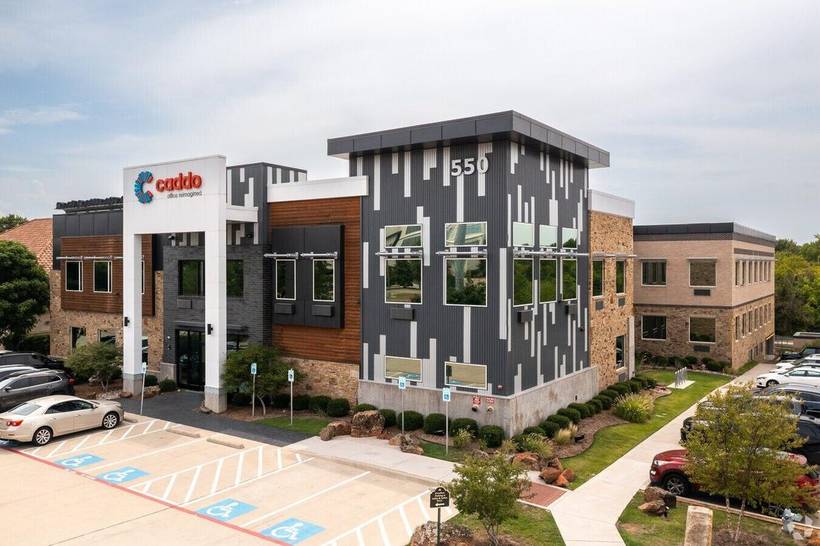
Consultations are free, and you will speak with an attorney — not an intake screener. Call (972) 772-8005 or use the contact form. Our Allen office is at 550 S. Watters Road, Suite 259; we also serve Rockwall County from our Rockwall office.