
Rockwall Divorce & Family Law Attorney
If you are facing a divorce or a custody case in Rockwall County, you are trying to answer two questions at once: what is about to happen to my family, and who should be standing next to me while it does.
We do family law. Only family law. That is the entire practice — divorce, child custody, property division, modifications, enforcement, and appeals. We do not take criminal cases between family cases. We do not fit your hearing around a personal injury docket. It is the only thing this office does, and it is what this office has done from Rockwall since 2000.
What follows is not a sales pitch. It is roughly what we would tell you in the first twenty minutes of a consultation about how a family case actually moves through this courthouse — including the parts that are usually oversold to you, and the parts most cases do not need at all.
Where your case will be heard
Rockwall County has three district courts and two county courts at law. Family cases are handled by the 382nd District Court, the 439th District Court, the 503rd District Court, and County Court at Law No. 1. Rockwall County Court at Law No. 2 does not typically hear any family law matters.
The four benches are held by Judge Brett Hall (382nd), Judge David Rakow (439th), Judge Brian Williams (503rd), and, at County Court at Law No. 1, Judge Keith Wheeler on an interim basis until Ben Massar takes the bench in January 2027. None of these is a dedicated family court — the district courts also carry the county’s felony and larger civil dockets, and County Court at Law No. 1 handles probate, misdemeanors and smaller civil matters as well. Who sits where, how each court differs, and links to the county’s own rules and standing orders are set out on the Rockwall County family court judges page.
None of these judges run their courts identically. How quickly a case moves, how a temporary orders hearing gets set and how much time you actually get, what a particular judge wants to hear first, how a given argument tends to land — all of it varies by court. Which of four courts your case is assigned to is not something you choose, and it is not a detail.
This is the part that cannot be researched. David Eaker has known every judge in Rockwall County since before they were judges — a few since before they were lawyers. That is not a credential on a wall. It is knowing the preferences and idiosyncrasies of how the judges view matters that helps us predict how a court may handle your particular situation.
The courthouse

The Rockwall County courthouse is at 1111 East Yellowjacket Lane, Rockwall, TX 75087 — the large marble building on I-30, across from the district football stadium and the library, which tells you most of what you need to know about the size of this county. Parking is not a problem. The district courtrooms are on the fourth floor; County Court at Law No. 1 recently moved to the third.
Two things people find online that are not true
There is no legal separation in Texas. It is not a status you can file for, be granted, or live in. You are married or you are not. What people usually mean is living apart while a case is pending, which is common and which temporary arrangements can address — but nothing about your legal status changes because you moved out. Your legal marital status does not change until the formal divorce decree is signed by the Court.
Nothing happens on day 60. Texas has a statutory waiting period between filing and the earliest a divorce can be granted, and it is one of the most-searched and least-relevant facts about Texas divorce. There is no hearing on day 60. Your marital status does not change on day 60. No judge or lawyer in this state puts it on a calendar, because virtually every case takes longer than that and the date passes without anyone noticing it. If a website is organizing your divorce around that number, it is telling you about search traffic, not about your case.
How long a case actually takes
Judges are now under a mandate from their overseeing body to resolve cases within twelve months of filing, and that has changed the pace of family litigation more than any other recent development.
- Most cases in Rockwall and Collin County resolve in nine to twelve months.
- A straightforward divorce where the parties largely agree can finish in three to six.
- Cases in Hunt, Kaufman and Dallas Counties often run longer, simply because of how those judges move their dockets.
- Even within Rockwall, some judges move cases faster than others.
- A case lasting two years or more is not unheard of when the circumstances genuinely call for it.
The honest answer is that the length of your case is driven far more by how much the parties disagree, and by how complicated the assets are, than by anything a lawyer controls.
More detail, including what the sixty-day waiting period is not: how long a divorce takes in Rockwall County.
Temporary orders — and why most cases do not need them
Temporary orders address who lives where, when each parent has the children, and who pays what while the case is pending. They are limited to preserving the children and the property during the case; they do not decide the final outcome.
Not every case needs them, and most do not. If the two of you can agree on how to use the house and the accounts for now, and on a workable schedule for the children while the case is pending, temporary orders are unnecessary. When you cannot agree, they exist and they help. The distinction matters because a contested temporary orders hearing is one of the more expensive events in a family case, and paying for one you did not need is money that does not come back.
More on when you genuinely need one and how the four benches differ: what happens at a temporary orders hearing in Rockwall County.
Discovery — same principle
Formal discovery is the structured, court-backed exchange of financial information: written questions, document requests, sworn answers, sometimes depositions. It is necessary when a party does not have access to the information they need to make an informed decision — and in plenty of cases, one spouse genuinely does not.
But when you already have the information, or when both sides will simply exchange what is missing, formal discovery adds cost without adding knowledge. The point of the process is to get you to a decision you can make with your eyes open. If you are already there, the process is not the goal.
This is where family law bills get out of hand. Some firms run formal discovery, contested temporary orders, and a scheduled mediation in every case, regardless of the facts. It is a defensible way to practice and it is a very expensive way to be a client. We make those calls case by case, and we tell you why.
Mediation in Rockwall County
Every Rockwall court orders mediation before a case goes to trial. Not most of them — all of them. Rockwall judges also strongly prefer mediation in person rather than over Zoom (a particular characteristic of Rockwall, whereas Collin and Dallas mediations are more often via Zoom).
The mediator is appointed by the court, usually on the suggestion or agreement of the two lawyers. The mediator decides nothing. What a good mediator does is problem-solve: put solutions on the table that neither side had thought of, and reality-check the legal and factual arguments each side has been telling itself. The purpose is to keep the decision with the two of you rather than handing it to a judge who will hear a few hours of testimony about a family they have never met and make the most critical decisions.
Worth knowing: attorneys on both sides of family cases across North Texas choose David Eaker as their mediator — and the court then appoints him by their agreement — to help them resolve cases that are not theirs to settle alone. When he is the mediator, he is not on anyone’s side. When he is your lawyer, that same experience is what tells him which arguments will actually move the other room.
More on what the day involves, who pays, and what happens if you do not settle: do I have to go to mediation in Rockwall County?
Custody: what is really being decided
In almost every case, both parents end up joint managing conservators with independent rights to care for their children. That is the norm, not the exception, and it is worth knowing before you spend months braced for a battle over whether you will be a parent.
The real work is the schedule. It has to fit the children’s school calendar, their extracurriculars, each parent’s work schedule, and what actually functions for the whole family — two households that now have to run one set of children’s lives between them. That is the problem we spend our time solving, and it is a design problem more than a legal one.
Rockwall County is small and almost entirely Rockwall ISD, with Royse City ISD covering part of it. But families here identify with their communities as much as their district — Heath, Fate, McLendon-Chisholm, Royse City, and the city of Rockwall itself. Where each parent ends up living, and which school the children stay in, shapes the schedule more than any other single factor.
Property division
Texas is a community property state, which people take to mean everything is split down the middle. It does not. The court divides the community estate in a manner it deems just and right — and what is community, what is separate, and what a thing is actually worth are all separate questions that come before anything is divided.
What comes up here specifically:
- Lake Ray Hubbard property. Waterfront and near-water property does not value or divide like an ordinary house.
- Land and acreage. Property owned before the marriage, inherited, or carved out of a family tract raises separate-property tracing questions, and tracing is a documentation exercise most people are not prepared for.
- Business owners. If one spouse owns a company, a professional practice, or an interest in a closely held business, the case turns on valuation and on what is genuinely distributable.
- Executive and deferred compensation. Restricted stock, options, bonuses and retirement accounts are each treated differently depending on when they were earned versus when they vest.
This is the work we do most. See Complex Property Division for how these cases are actually built.
What a divorce actually costs
Your first consultation is free — here is what it covers and what it does not. After that, here is the straight answer most firms will not put in writing — not our rates, but what a case in this market realistically costs, so you can plan instead of guess. Before you compare quotes, it is worth understanding what a retainer actually is — it is a deposit you maintain, not the price of the case.
- Initial deposit: most family law firms in this area ask for a deposit somewhere between $2,500 and $10,000, depending on what the case looks like at the start.
- Hourly rates in Rockwall generally run from about $150 an hour for paralegal work up to about $500 an hour for an experienced attorney, with everything in between. That range is why who does which task matters so much to your total.
- A simple divorce — both people substantially in agreement — commonly runs about $2,500 to $5,000 per side in total fees.
- A typical contested Rockwall case tends to land closer to $20,000 to $25,000 per party.
- A genuinely complicated case — serious asset disputes, expert witnesses, a high level of conflict — can reach $40,000 to $50,000 per party or more.
The honest summary: a divorce is not measured in hundreds of dollars, and almost nothing determines where you land in that range more than how much the two of you contest and how many, and whether, experts get involved. That is also why the decisions earlier on this page — whether you actually need contested temporary orders, whether you actually need formal discovery — are not abstractions. They are the difference between the bottom of that range and the top of it.
We wrote about this in more detail here: How Much Does a Texas Divorce Cost? and here: 10 Practical Tips to Reduce Your Legal Costs.
How we work
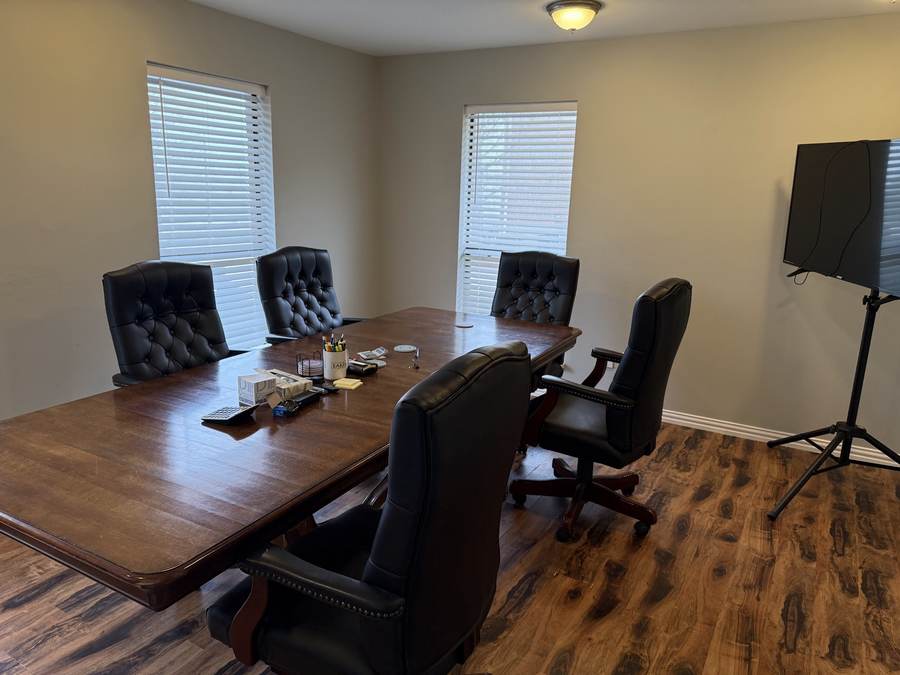
David Eaker keeps the principal strategic role on every case, and the firm works as a unit, with tasks handled by whoever on the team can do them well at the lowest cost. Leslie Alvarez, our associate attorney, and Heather Mixon, our paralegal — who brings more than twenty years of family law experience — carry work under that direction, at their own rates.
The reason we work that way is not that it sounds impressive. It is that you do not have unlimited resources, and every decision in your case has to be weighed against what it actually returns. Part of our job is telling you when something is not worth doing.
The other advantage is simple availability. When one of us is in mediation or in trial, that person is giving your case — or someone else’s — undivided attention for the entire day. Because more than one person here knows your file, the office is not empty while that happens. You get the same undivided day when it is your turn.
A Rockwall firm, and why that is not a throwaway line
Search “Rockwall divorce lawyer” and most of what comes back is not from Rockwall. Firms in Dallas, Richardson, Kaufman and further out buy those results, publish county pages written by marketing departments, and take the cases. Some are perfectly good lawyers. But there is a difference between a firm that appears in this courthouse and a firm that appears in this search result.
David Eaker opened a practice in Rockwall soon after finishing SMU School of Law, and his office has been here ever since. He raised his two sons here, in Rockwall and Heath — preschool and elementary at Amy Parks Heath Elementary, middle school at Cain — as a single father with primary responsibility for them from when they were very young. He was assistant scoutmaster of Troop 690 and longtime cubmaster of Pack 368, served on the Rockwall YMCA board, served as an officer of the Rockwall Bar Association, and spent a couple of years with the Rockwall Chamber of Commerce.
And we are known here — by the court staff, by the mediators, and by the attorneys who will be on the other side of your case. That is worth something on the day it matters.
Common questions
Do I have to live in Rockwall County to file here?
Generally you need to have lived in Texas for six months and in the county for ninety days before filing. If you and your spouse are in different counties there is often a choice about where the case belongs, and that choice can matter.
Is there such a thing as legal separation in Texas?
No. You are married or you are not. Living apart during a case is common, and temporary arrangements can address it, but your legal status does not change.
How long will this take?
Most Rockwall cases resolve in nine to twelve months. Straightforward ones can finish in three to six. Complicated ones take longer, and a small number take much longer. What actually determines the timeline.
Will my children get to choose who they live with?
No. A child twelve or older can tell the judge their preference in chambers, and a judge will listen — but the decision belongs to the court, and preference is one factor among many.
Do we have to go to mediation?
In Rockwall County, yes — every court orders it before trial, and the judges here prefer it in person. What happens on the day, and why the agreement binds.
What should I do first?
Do not move money, do not move the children, and do not put anything in a text message you would not want a judge to read. Then call us.




The AV Preeminent peer rating, the Avvo rating and the Credentialed Mediator designation are held individually by David Eaker. David Eaker and Leslie Alvarez are members of the Texas Bar College.
Talk to a Rockwall family lawyer before you make the next decision
Consultations are free, and you will speak with an attorney — not an intake screener. Call (972) 772-8005 or use the contact form. Our Rockwall office is at 2313 Ridge Road, Suite 103; we also serve Collin County from our Allen office.
Were you never married to your child’s other parent? Texas recognizes a legal father in only three ways, and being on the birth certificate is only one of them — see paternity and legal fatherhood in Texas.
Looking for something else? Answers on Texas Divorce and Custody collects everything we have written — filing, custody, property, the court process, high-conflict cases — free to read and sorted by what you are trying to work out.